Exploration
Ernest Shackleton
Polar exploration, preparation, and public storytelling
Ernest Shackleton’s recorded account of his South Polar expedition offers a direct encounter with the public voice of an Antarctic explorer. A record released in 1910 provides an early source for examining how exploration was described to audiences far from the expedition itself.
The life of Ernest Shackleton
A sailor before an explorer
Ernest Henry Shackleton was born at Kilkea, Ireland, on February 15, 1874. His family later moved to London, where he attended Dulwich College. He entered the merchant service after leaving school, gaining experience aboard sailing ships and steamships before qualifying as a master. His Antarctic career began with Robert Falcon Scott’s Discovery expedition in 1901. He edited the expedition newspaper, the South Polar Times, and joined Scott and Edward Wilson on a southern journey. Illness led to his being sent home in 1903. These public records establish experience and chronology, not a complete account of his private feelings. [S1]
Building the Nimrod expedition
Shackleton announced plans for his own expedition in February 1907. Fundraising, commercial relationships, and a small ship supported an ambitious programme of exploration and scientific observations. Nimrod departed Lyttelton on January 1, 1908. Ice conditions frustrated the intended landing farther east, and the party established its base at Cape Royds. That decision returned Shackleton to McMurdo Sound despite an earlier assurance to Scott. The surviving hut represents collective work: maintaining equipment, managing animals and supplies, and carrying out scientific investigations were all part of expedition life. These contributions should retain the names and perspectives of their participants. [S2]
The southern journey and its record
On January 9, 1909, Shackleton, Jameson Adams, Eric Marshall, and Frank Wild reached 88°23′ south. They returned without reaching the geographical South Pole. Shackleton’s published account describes limited provisions, demanding surfaces, altitude, and declining strength. Other expedition members pursued separate geographical and scientific objectives; their accomplishments should not automatically become achievements of the leader alone. The Heart of the Antarctic brought the expedition’s results to readers in 1909. A commercial recording made in March 1910 and released that July preserves a particular public performance. It provides evidence of his public words, not a complete everyday conversational personality. [S3] [S4]
Later survival, shared credit, and a complicated legacy
The later Endurance story made Shackleton internationally famous. Survival depended on many people, including Frank Worsley’s navigation, boat crews, carpenters, those sustaining the Elephant Island camp, and external rescue assistance. The accompanying Ross Sea party suffered three deaths. Saying that everyone survived the entire expedition erases those losses. Shackleton died aboard Quest at South Georgia on January 5, 1922, aged 47. His reputation includes extraordinary crisis leadership as well as criticism of preparation, finances, and decisions. Exploration also operated within national and imperial ambitions. This full-life account includes later events that a reconstruction set in July 1910 cannot remember or predict. [S5] [S6] [S7]
A life in dates
This timeline covers the full life. A future historical conversation will use the perspective of July 1910; later events will remain separate from that reconstruction’s memories.
- 1874-02-15 Born at Kilkea, Ireland. [S1]
- 1898 Qualifies as a master. [S1]
- 1901 Joins the Discovery expedition. [S1]
- 1902-12-30 Reaches the expedition’s farthest south with Scott and Wilson. [S1]
- 1903-03 Returns home aboard Morning after illness. [S1]
- 1907-02-11 Announces plans for his own Antarctic expedition. [S2]
- 1908-01-01 Nimrod leaves Lyttelton, New Zealand. [S2]
- 1909-01-09 Southern party reaches 88°23′S before returning. [S3]
- 1909 The Heart of the Antarctic is published. [S3]
- 1910-03-30 Records My South Polar expedition. [S4]
- 1910-07 The recording is released as Edison Amberol 4M-473. [S4]
- 1915-11-21 Endurance sinks after its earlier abandonment. [S5]
- 1916-08-30 Elephant Island party is rescued. [S5]
- 1917-01-10 Aurora reaches the Ross Sea survivors; three party members have died. [S6]
- 1922-01-05 Dies aboard Quest at South Georgia, aged 47. [S7]
Documented words
These are short excerpts from identified texts, rather than newly generated dialogue.
Our last day outwards.
A short line from the published journey diary. It does not authorize invented diary entries or claims about private feelings.
We failed in this object
A fragment of the later account acknowledging failure of the crossing objective; it is outside the July 1910 setting.
Questions and limits in the evidence
Claim to check: Some institutional biographies give a different farthest-south latitude.
Use 88°23′S from the 1909 primary account; preserve the conflicting SPRI entry rather than averaging coordinates. [S1] [S3]
Claim to check: The Endurance abandonment and sinking happened on the same date.
Keep October abandonment separate from the November 21, 1915 sinking documented in South; both are later than the conversation setting. [S5]
Claim to check: Everyone on all of Shackleton’s expeditions survived.
Distinguish the Endurance ship’s party from three deaths in the Ross Sea party and acknowledge other participants and rescue support. [S5] [S6]
Claim to check: The familiar hazardous-journey recruitment advertisement is an authenticated Shackleton quotation.
Its authenticity has not been confirmed; do not reproduce it as his verified words. [S8]
Claim to check: Institutional biographies agree on the death date and age.
Use Royal Museums Greenwich’s January 5, 1922 and age 47; the SPRI summary contains conflicting wording. [S1] [S7]
Claim to check: The precise English departure date is consistent across the hut history page.
Avoid imposing a day from conflicting statements; use its supported January 1, 1908 Lyttelton departure. [S2]
Claim to check: An institutional page is automatically commercially reusable training text.
The NZ history page’s CC BY-NC prose is not licensed for commercial ingestion; use original factual synthesis and provenance links. [S6]
A source-checked editorial draft, assembled from the references below. It has not yet had an independent historian’s review.
Biography sources
- [S1] Sir Ernest Henry Shackleton — Scott Polar Research Institute
Early life and Discovery service
- [S2] History of Shackleton’s expedition — Antarctic Heritage Trust
Announcement, financing, Lyttelton departure and Cape Royds
- [S3] The Heart of the Antarctic, volume I — Ernest Shackleton, 1909
Preface; chapters I, XIV, XXIII and XXIV; January 9 diary entry
- [S4] Documentary recordings and political speeches — National Park Service
My South Polar expedition; Edison Amberol 4M-473; recorded March 30, 1910; July 1910 release
- [S5] South — Ernest Shackleton, 1919
Preface; chapters V, IX–XI and XIII–XVII
- [S6] Shackleton’s sea parties — New Zealand Ministry for Culture and Heritage
Endurance party and Ross Sea party
- [S7] Shackleton’s death and legacy — Royal Museums Greenwich
January 5, 1922 death, age 47; discussion of reputation
- [S8] Safe return doubtful: advertisement provenance — Gonville & Caius College
Authenticity of the familiar recruitment advertisement
Hear the historical recording
My South Polar expedition · First released July 1910 · About 4 minutes
This is an archival recording of Ernest Shackleton, as identified by the archive. It is separate from any future AI-generated dialogue.
Listen at the National Park Service
National Park Service, Thomas Edison National Historical Park; courtesy Ward Marston collection
Reading the historical record
His account is one perspective rather than a complete expedition history. A source-based profile can compare an explorer’s public presentation with expedition records, practical constraints, and the experiences of other participants. Later events require their own sources rather than being read back into this recording.
Questions worth exploring
- How did Shackleton describe his South Polar expedition?
- What can an expedition account reveal about preparation?
- How does a public account differ from an expedition diary?
Recordings, images, and archival sources
These links lead to the archives. Inclusion is a research reference, not a claim that every item is cleared for reuse.
-
recording · Original release documented
My South Polar expedition (1910)
The National Park Service lists a July 1910 release, Edison Amberol 4M-473. Its hosted recording is credited to the Ward Marston collection.
-
reference · Reference
Archive context and supporting evidence
Context for research; this reference does not approve a reconstruction.
-
reference · Historical context
Shackleton expedition history — State Library of New South Wales
Background for further research into Antarctic exploration.
-
photograph · Pre-1926 publication documented
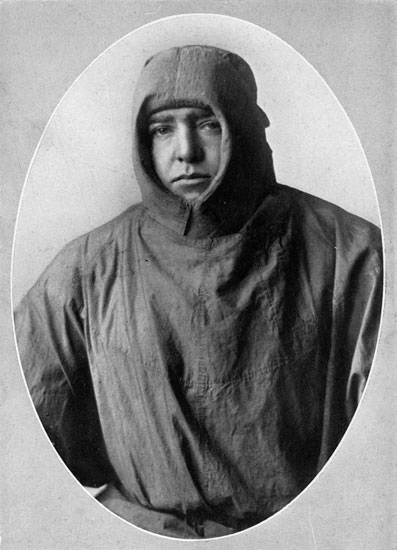
Sir Ernest Shackleton in Polar Clothing — selected published portrait
F. & A. Swaine, as credited in the selected edition. Included in Shackleton’s Last Voyage, Frank Wild, Cassell, plate facing page 4; published May 1923. This reference does not approve a synthetic likeness.
-
reference · Publication evidence
Printed edition documenting the selected portrait
The publication statement and photographic caption were inspected. Digital upload dates are separate from the original print publication.
Source notes reviewed . Publication evidence and permission for a reconstruction are separate questions.